


 Tuesday , 18 December 2012
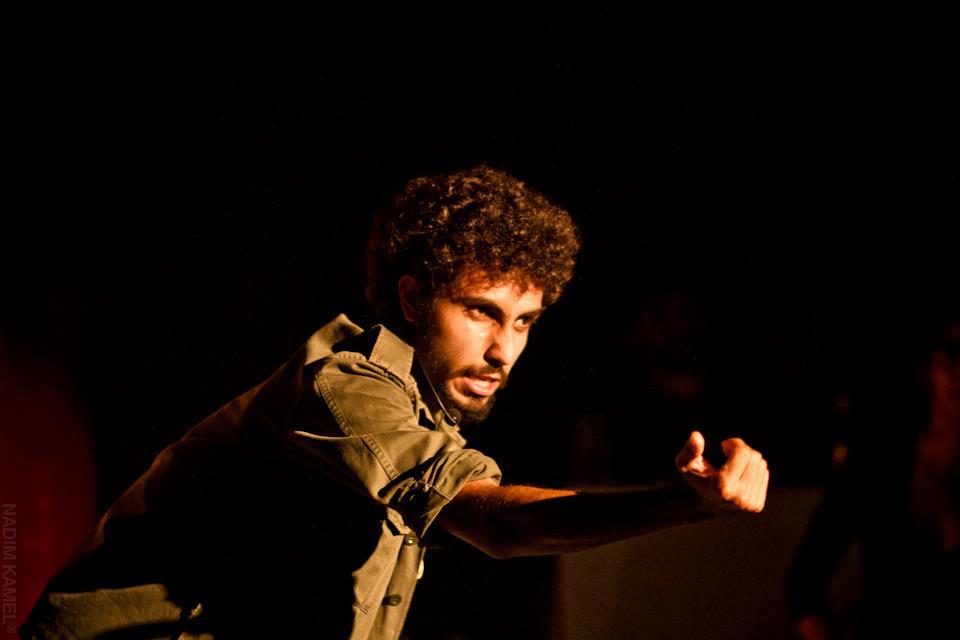
“Historically speaking, the world perceived Beirut as a capital of books,” says Mohamad Hodeib, a Lebanese spoken word poet and cultural activist living in the Beirut neighborhood of Hamra. Now, the city “is a place for high class people to come on vacation,” he adds.
Hodeib is a recent graduate from the Lebanese American University where he studied political science, international studies, and economics. Since graduating from university in the spring of 2012 he has dedicated his time to cultural activism. “This city needs us (artists and cultural activists) more than it needs its politicians or its army,” he says.
Born in 1990, Hodeib considers himself to be part of a post-war generation in Lebanon that is coming of age at a critical time both politically and culturally for the country. The dominant culture right now is political culture, Hodeib says, and “our political culture lacks exposure to new ideas.” Cultural activists have to offer an alternative culture to the prevalent culture of work and nepotism (known as wasta in Lebanon), he adds.
Hodeib’s cultural activities began in 2009 when he started playing in a band called Wled el Balad (Children of the Country in Arabic) that combined elements of grunge rock with oriental influences. Around the same time he started writing and performing spoken word poetry under the stage name El Walad (The Boy in Arabic).
In December 2011, Hodeib organized a party in an alleyway in Hamra with several friends. During the party he jumped on some rocks to recite his poetry and proposed the idea of organizing regular street art performances in Hamra that have come to be called El Yafta sessions, he says. Since 2011, Hodeib and Bukhar Beirut, a cultural collective that grew up around the initiative, have organized 15 El Yafta Sessions.
The sessions are inspired by an anarchist group called Up Against the Wall Motherfuckers that was active during the late 1960s in the United States and the Arabic tradition of a market of poets. Even before Islam, Hodeib explains, there was a tradition of public poetry in Arabic culture, and Up against the Wall Motherfuckers was a group that believed art should be on the streets and not restricted to galleries. “We are trying to take poetry from closed circles… and bring it back to the public,” he says.
“We are starting to lack culture,” Hodeib continues. “We are lacking the culture of reading books and being artists.” The goal of El Yafta sessions and Bukhar Beirut is not to gather artists who already exist, but to find new ones to make the cultural scene in Beirut richer. “If you want to go do poetry or be an artist just go do it,” Hodeib says. Don’t worry about people telling you that you won’t be able to make money or have a job, he adds.
At the same time, the high-end development projects taking place across Beirut are driving youth out of the city to the suburbs and the neighborhoods close to the airport, Hodeib says. Because of the cost of living, there is no way to survive in the city as an artist. “Cultural activism is more like suicide,” he adds.
Hodeib’s poetry and performances address his experience as a young man and a college graduate unable to find work or afford rent in Beirut. He has developed a number of characters that appear in the poems he performs as El Walad. Each character represents a different experience in the city, but is also related to his personal experience, Hodeib says.
After graduating from university Hodeib bought a one-way ticket to New York. He was following the culture of work that tells young people in Beirut to get a degree, get a green card, and leave, he explains. He went to New York with the intention of getting a job and eventually going to graduate school there, but after two weeks he left New York for Toronto and a month and a half later was back in Beirut. “This is my city,” he says. “I’m not leaving it for another city.
Staying in Beirut means having to fight for his ability to exist and be recognized in a dominant culture that does not value art and creativity, Hodeib says. We have to offer a culture that is accessible and interactive and addresses what the youth really need. “We are actually going counter culture right now,” he adds. “This is a battle for survival from my side.”
“What we need right now is art; I came to the conclusion that political action in this country is leading nowhere,” he says. “Even if I had a political statement to say I’d rather say it in an artistic way.”
“Cultural activism is spreading the practice of freedom,” Hodeib adds. “We are not trying to create a culture for the country. We are just trying to prove that it does exist; expose it.” In Beirut, he concludes, “you have the freedom; you just have to dare to use it.”
Eric Reidy is a
project assistant at the SKeyes Center for Media and Cultural Freedom
researching and writing about the cultural scene in Beirut. This article is
part of a regular interview series with artists living, working, and creating
in Beirut.
- “Beirut Has a Special Magic”: An interview with Syrian artist Gylan Safadi