


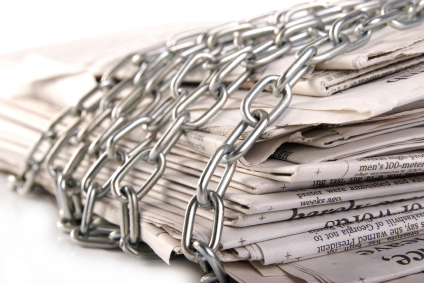
For those who believe in a free and independent press in
Lebanon, our latest report on media freedom in the country makes
depressing reading. In total, in 2013 there were at least two cases a month of
journalists being assaulted across the country. These abuses ranged from being
shot at in Tripoli, being illegally detained by Hezbollah, Salafists and other
non-state actors, to even being beaten up by security forces in Beirut.
Most worryingly, there is a growing silence following such
cases, with impunity for the perpetrators all too common. Virtually none of
these abuses have been prosecuted, despite seemingly unequivocal evidence in
some cases. Simply put, the government is not doing enough to protect these
most basic rights.
In the long run, what is needed to protect freedom of speech
are changes to the country’s laws. Foremost among these is the passing of the
2009 draft law on freedom of information. This law, debated
by parliament in 2012 but never passed, would give journalists new protections
to question those in authority.
The second legal change that is needed is the
decriminalization of libel, slander and defamation. While it is right that
people should be held accountable for what they publish, these are matters that
should be dealt with in a civil court. No one should ever face going to jail as
this threat pushes reporters into not asking the toughest questions.
Judicial hope
Yet if we are honest, these legal changes do not look
forthcoming. Lebanon’s politicians have a pretty woeful record of passing
legislation at the best of times. Right now we have a parliament that last
summer (arguably unconstitutionally) extended its own mandate by 17 months.
Since doing so, they have passed precisely zero legislation. Simply put, the
chances of getting the changes we need right now are negligible.
With the new government due to disband in only a couple of
months, in the short-term the judicial system is our only fully functioning
institution. As such, it is our best hope of better protecting the values we
hold dear. Parts of that system have shown themselves open to defending freedom
of expression. In the 1999 Marcel Khalife case, for example, the judge ruled in favor
of the artist who had been sued by Dar al-Fatwa for putting a Quranic verse to
music. The ruling set a major precedent for the protection of cultural
expression.
This and other examples show that there is clearly a possibility
that the judiciary will back liberal values. The most recent ruling by judge Naji Al-Dahdah in a LGBT case
is another sign that things can move in the right direction through the
judiciary.
Yet there are in fact two areas of the judiciary that deal
with media freedom in Lebanon. The main judicial system, on the one hand, which
would rule on cases of physical abuses, unlawful detention and death threats,
and, on the other hand, the Publications Court, which deals with cases against
media publications (including online) covering issues of libel, slander and
defamation.
This duel system can sometimes end up with bizarre
old_paradoxes. Al Akhbar journalist Mohammed Nazzal, for example, exposed clear
corruption in the judiciary – leading directly to a judge being demoted. Yet
the Publications Courtdeclared he had brought the judiciary into disrepute,
and therefore fined him. This is clearly illogical – we need protection for
those exposing injustice in any form.
Taking the initiative
Going forward, therefore, it is no longer enough to merely
defend journalists that are unjustly beaten up, detained or sued. We must
empower those that have their rights abused – initiating action and giving them
the legal support and capacity to take their cases to court. To that end,
SKeyes has launched a strategic litigation program and invites journalists
subjected to violations to come forward so that, with our support, they can
seek justice through all available legal means.
By putting these cases directly in front of the judiciary,
we increase the pressure on judges to protect freedom of speech. Key cases
could be the attacks on journalists from New TV in
downtown Beirut on November 26, 2013 or the attacks on bloggers and civic
activists demonstrating in June 2013 against the postponement of parliamentary
elections. The evidence against those that attacked them appears so compelling
– there is huge amounts of video footage of the events – that if and when it
eventually comes to trial, the right decision is crucial.
