


 Wednesday , 03 October 2012
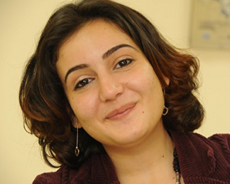
DEFYING EXPECTIATIONS TO REPORT ON HUMAN RIGHTS IN GAZA
In 2007, Asmaa al-Ghoul
wrote an article that changed her life. That was the year she published a
scathing critique of Palestinian ruling authorities in a Gaza newspaper. The
story would have been controversial by itself, but was made more so by the fact
that al-Ghoul penned it in the form of a critical letter to her uncle, a senior
military leader for Gaza ruling faction Hamas. Titled “Dear Uncle, Is This the
Homeland We Want?” the letter shared memories of al-Ghoul’s uncle, with whom
she had been raised. She sharply criticized him for abetting the oppression of
Gaza by forcing Hamas’ Islamic views on the population. She recalled him using the
family home to interrogate and beat members of political group Fatah.
With the article,
al-Ghoul found her voice as a human rights and social issues reporter. She also
drew the ire of her uncle, who disowned her and threatened to kill her.
Al-Ghoul was studying journalism in South Korea at the time of her story’s
publication, but menacing phone messages were left at the home of her father.
Hamas authorities told her she could not return to Gaza. Some in al-Ghoul’s
family called her, begging her to quit writing and apologize.
Al-Ghoul was determined
not to stop her work. She went to Egypt for a few months after Korea and then
returned to Gaza, where she began to write again.
She reported on the
escalating unrest between Hamas and Fatah. She chronicled the 2008-09 Israeli
bombardment of Gaza, which left as many as 1,400 Palestinians dead and tens of
thousands homeless. She went into the hardest-hit areas there, bearing witness
to the civilian casualties, many of them children, caused by incessant missile
attacks. Al-Ghoul has covered the unpunished murders of young girls for family
“honor”, lack of access to education for women and the dwindling freedoms of
Gazan people under Hamas. She turns an equally critical eye on each of her
subjects, which means she draws criticism from all sides.
Al-Ghoul said her life
and career have, to some extent, been defined by clashes with authority. She
said that even as a child, she wanted to write about the human condition. “I
always had something inside me like…like I wanted to tell the people something,”
she said. “The dream I had to tell people what I believed became bigger and
bigger,” she said. But as the risk increased, that dream became “a hard thing
to follow.”
Since her first article
until the present, al-Ghoul’s work has never been easy. In early 2011, she was
beaten while covering a solidarity gathering between Palestinians and
Egyptians. Two months later, she was one of seven journalists assaulted and
tortured by Hamas security forces while reporting on rallies calling for Hamas
to reconcile with Fatah. She regularly receives violent and explicit threats against
her own life and that of her young son.
Her recent work has been
motivated by what she views as a war on the culture of Gaza. She criticizes
factions in and out of the region for its decline. Fiercely secular, al-Ghoul
speaks about Hamas’ attempted radicalization of social values with alarm. “I
came back to my family home and they wanted me to wear a hijab and they wanted
me to not talk with the men. Young men, like me,” she explains. “I wanted to be
natural. And they wanted to put me in five rooms, because they think this is
what God says.” As a freelance journalist, al-Ghoul contributes regularly to
Al-Ayyam newspaper, a popular Palestinian daily. She reports for other entities
as well, but al-Ghoul considers digital media to be her best tool in speaking
out about society and corruption. With traditional media, she said, “there is
always an editor telling me what I should write and what I should not write.
With blogging, I found myself more and more.”
Al-Ghoul uses her blog
to tell stories about daily life in Gaza, including the scrutiny she faces as a
journalist and the indignities she suffers as a woman. She said social media
have great potential “to become part of the conversation about rights” in
Palestine. Al-Ghoul said she keeps reporting because she is a part of the
struggle of all people in Gaza – to have a better life, to have basic human
rights…“when you cover these issues, you are struggling in the streets with the
other people,” she said.
From her childhood in
Rafah, a city south of Gaza, reading books and writing poems “about love and
freedom” to the publication of her first story at 17 years old, al-Ghoul has
carved out a unique path for herself as a defender of peace in a place of
conflict; as an advocate of openness where there is an endless war for control.
The desire to speak out
for freedom is “like a sickness,” al-Ghoul said. “A disease I will have all my
life, but I love it.”