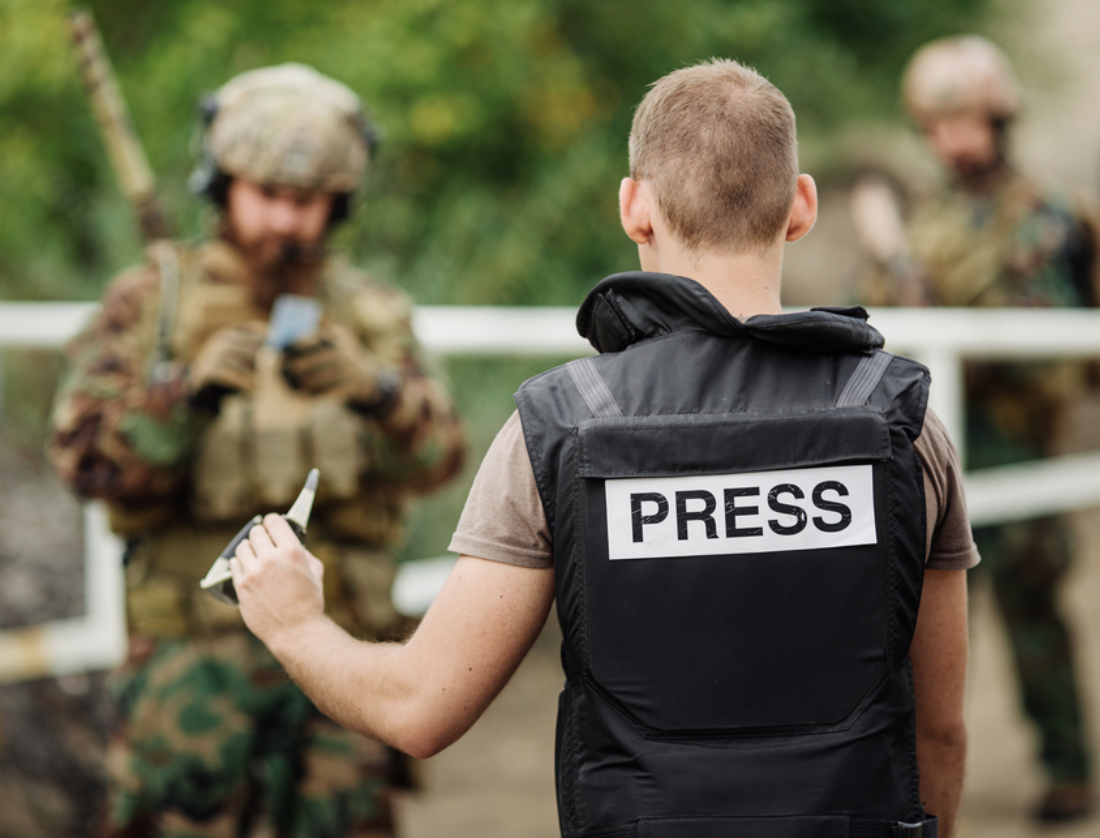
Covering revolutions can sound romantic. The tragedy of a war creates powerful stories. Journalists, wanting to be present where history is being written, are naturally attracted by events like these. Conflict zones, though, are hostile to everyone, including journalists. Despite the appeal of reporting from a war zone,
“no story is more valuable than your life,” according to the Washington Post’s Ed O'Keefe. To minimize the risks that reporting from a conflict zone entails, more and more journalists are attending specialized hostile environment first aid training (HEFAT) programs. The trainings consist of mock scenarios and exercises that teach participants how to react in dangerous situations. First-aid techniques such as CPR are also a part of HEFAT programs – and, according to some, the most important one.
HEFAT courses started to emerge in the 1990s during the Yugoslav wars when many journalists faced numerous difficulties and dangers. When the United States and the United Kingdom intervened in Iraq in 2003, the popularity of HEFAT programs rose again. By the time of the Arab Spring revolts, many news organizations had made HEFAT training a priority for their reporters. The need for these programs is clear:
21 journalists were killed in the first year of the Arab spring. The images of James Foley’s decapitation after his abduction as well as
the story of Austin Tice underline the risks of reporting from a hostile environment.
“Reporting from countries where there is insurgency or wars means journalists will likely deal with the threat of snipers, so wearing a helmet is absolutely necessary,” says Thomas Bowman of SafeGuard Armour, a company that manufactures protection equipment. “To ensure their safety and survival, media personnel should be aware of all available safety options,” he adds.
HEFAT programs are constantly evolving, and many organizations offer specialized courses.
Global Journalist Security,
Trauma Training for Journalists, SEPAR International,
First Option Safety, and
Blue Mountain are some of the most popular. Their teaching methods and the equipment they use often differ. Basic first-aid training is a part of most programs. It is difficult to teach more advanced medical skills to participants with no medical background in just a couple of days. Some courses, though, also include teaching specific complicated techniques that can save many lives in a conflict zone.
Despite the debates that exist about best practices, HEFAT courses can prove to be life-saving. Today, leading international media organizations pay for their journalists to attend such programs before they go to conflict zones. Freelancers and journalists working for smaller local or regional outlets, however, have difficulties paying course fees and often end up in hostile environments without adequate preold_paration.
To address this issue, the Samir Kassir Foundation is planning to organize two free 4-day HEFAT courses that will take place in Lebanon before the end of the year. A detailed application form for candidates will be made available in the coming weeks. Meanwhile, for more info or for expression of interest, please email
info@skeyesmedia.org.


 Thursday , 31 August 2017