


 Wednesday , 01 April 2026
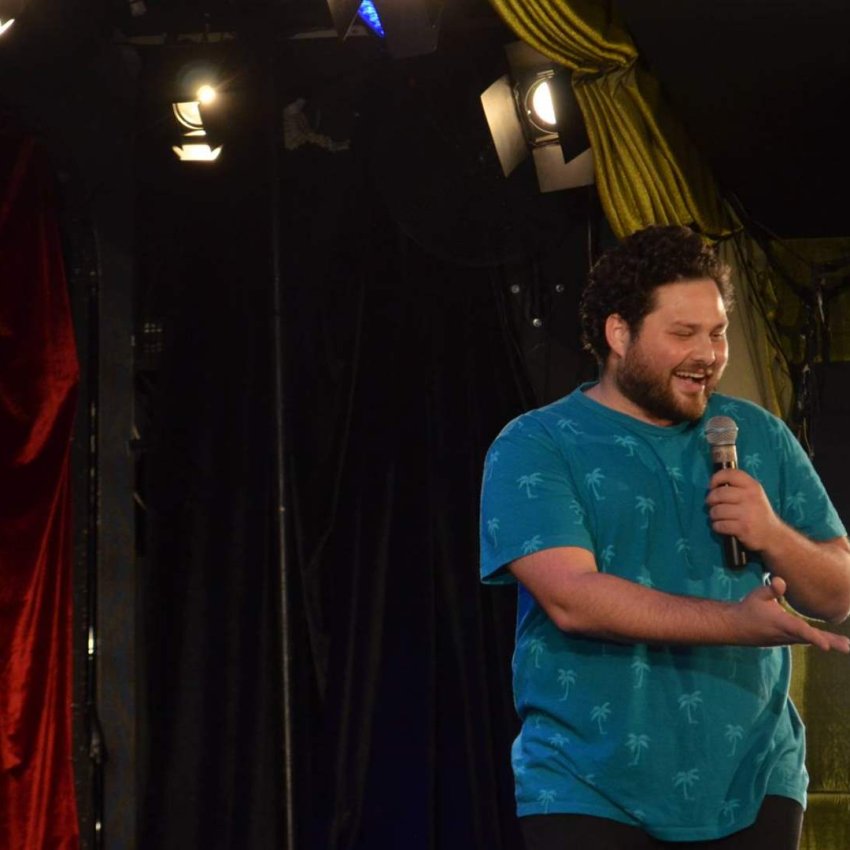
In cooperation with the Center for Law and Democracy, the Samir Kassir Foundation is evaluating some of the most prominent Lebanese judicial rulings related to issues of freedom of opinion, expression, and the press, from the perspective of international law and best practices. Some of these verdicts were in favor of enhancing freedoms, while others contributed to restricting freedoms and rights. The following is the seventh case study, on the ruling issued in favor of comedian Nour Hajjar and Awkward on December 9, 2025.
Facts
In 2023, Nour Hajjar, a comedian, did a stand-up comedy performance at the “Awkward” theatre which involved a skit about soldiers with the Lebanese Army being forced to work for food delivery services like Toters, which operates in Lebanon and Iraq (similar to DoorDash and Uber Eats), as a result of the economic crisis. The skit was videoed and made available online.
In August 2023, based on these events, Mona Hanqir, Assistant to the Government Commissioner at the Military Court, summoned Hajjar for questioning at Military Police headquarters in Rihaniyeh. Hajjar was questioned while in the presence of his lawyer, Ms. Diala Shehadeh, and then released after being held for approximately nine hours.
Hajjar and the director of “Awkward”, Dani Abou Jaoudeh, were later charged with breach of Article 157 of the Code of Military Justice, which criminalises actions which insult the Army or harm its reputation.
The case was eventually heard on 12 September 2025, before a Military Court presided over by Brigadier General Wassim Fayad, as part of a panel also including Civil Consultant Judge Abbas Jeha and Consultant Colonel Barbar Sarkis. Assistant Government Commissioner Judge Ziad Daghidi appeared on behalf of the Military Public Prosecution. A decision in the case was issued on 9 December 2025.
Decision
At the hearing, presiding Judge Fayad asked Hajjar about his profession, to which he replied, “I am a comedian.” The Judge then asked whether Hajjar had undermined the reputation of the Army, and the latter responded that his intention had been “to shed light on the suffering of Army personnel amid the economic crisis,” denying any intent to insult or defame. The Presiding Judge also questioned Abou Jaoudeh about his role in the matter, and he stated that he had produced and published the video. Finally, the Judge inquired whether Hajjar and Abou Jaoudeh had undertaken not to repeat the act, to which they replied that they had deleted the video and issued a clarification statement.
The Court then proceeded to acquit both defendants, in a unanimous decision, based on the presence of doubt and insufficient evidence as to their guilt. The Court also waived the legal fees and expenses of the defendants.
Analysis
In the end, this case could be considered a victory for freedom of expression, inasmuch as the defendants were declared innocent in the context of having been charged for expressing themselves.
At the same time, the decision was not made on the basis that the statements in question were protected speech but, rather, on the basis of the presence of doubt and insufficient evidence as to the guilt of the defendants. It is not clear what role was played by the fact that the defendants deleted the video and issued a clarification statement, since the Court did not specifically refer to that in its decision, but the impact of this on the outcome of the case might have been significant.
It may be noted that, under international law, official (public) bodies such as the army do not have a reputation which they can defend in law. Unlike private bodies, they are owned by and accountable to the public and do not have to compete in the market. They should thus not be able to bring cases to defend their reputation at all. This is set out very clearly in General Comment No. 34, adopted by the United Nations Human Rights Committee in 2011, which states:
States parties should not prohibit criticism of institutions, such as the army or the administration.[1]
As such, the very presence of Article 157 in the Code of Military Justice represents a breach of the right to freedom of expression as guaranteed under international law. We are not aware of whether or not the Court had the power to engage in a constitutional assessment of the legitimacy of this provision. But, even if it did not, it would have been useful for the Court to at least advert explicitly to the importance of protecting free criticism of and commentary on military actors as part of the right to freedom of expression and of the need to hold public actors, including military ones, accountable.
Outside of this clear international law rule, it may also be noted that defamation laws should only target statements which may be proven to be true. As indicated in General Comment No. 34:
[Defamation laws] should include such defences as the defence of truth and they should not be applied with regard to those forms of expression that are not, of their nature, subject to verification.[2]
Comedy, almost by definition, falls into the category of statements which are not subject to verification. We have not been able to review the video, but the context very strongly suggests that it was an example of satire rather than a specific (factual) allegation about the activities of soldiers.
Another international law principle that is very relevant to this case is that, in addition to public bodies not having a right to bring cases to defend their reputations, public officials should also be required to tolerate a high degree of criticism. The United Nations Human Rights Committee has made this clear on many occasions, including in General Comment 34, as follows:
[T]he Committee has observed that in circumstances of public debate concerning public figures in the political domain and public institutions, the value placed by the Covenant upon uninhibited expression is particularly high. Thus, the mere fact that forms of expression are considered to be insulting to a public figure is not sufficient to justify the imposition of penalties, albeit public figures may also benefit from the provisions of the Covenant.[3]
This case did not involve a comment on an individual official but, in the absence of a rule barring public bodies from bringing defamation cases, this principle should apply, i.e. public bodies should be expected to tolerate a high degree of criticism and public scrutiny. Here, again, some commentary along these lines from the court would have been useful.
[1] General Comment No. 34, 12 September 2011, CCPR/C/GC/34, para. 38. General Comments are authoritative interpretations of rights which are issued periodically by the UN Human Rights Committee. Available in different languages at https://docs.un.org/CCPR/C/GC/34.
[2] Ibid., para. 47.
[3] Ibid., para. 38.
This report was made possible thanks to the support of:.png)