Thursday , 08 January 2026
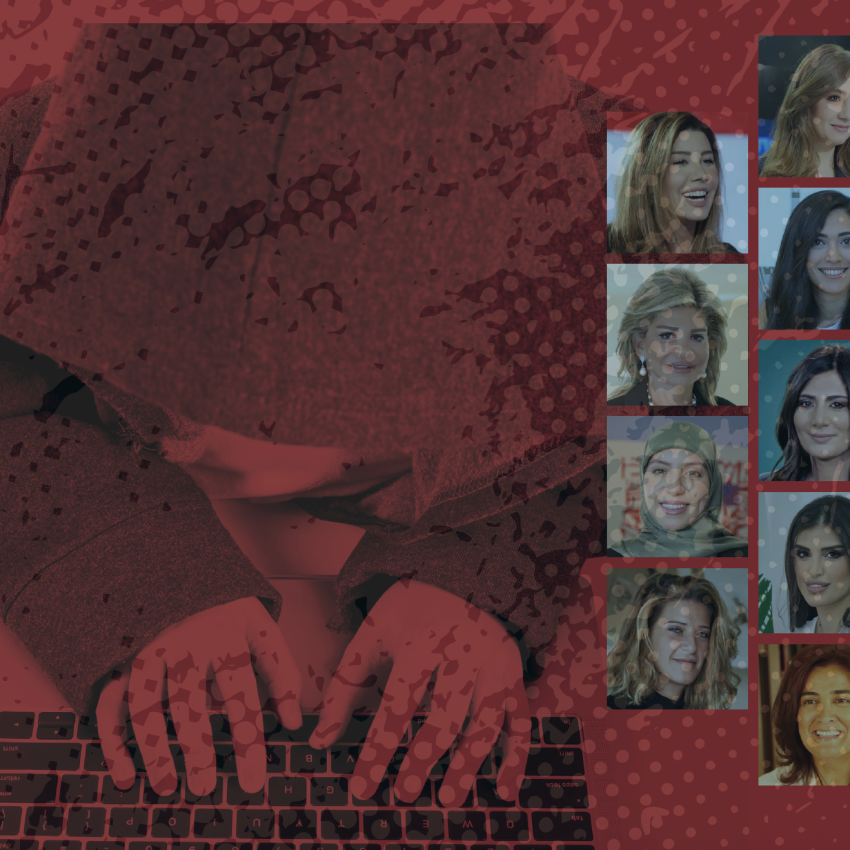
This study examines the digital harassment campaigns targeting women in Lebanon’s online sphere, focusing on journalists and political figures. Drawing from nine in-depth interviews, it shows how online abuse operates as a multi-layered tool of political control, social disciplining, and gendered intimidation.
While each case unfolds in its own context, several common threads emerge. In nearly all instances, the abuse is not accidental. It is intentional, coordinated, and designed to silence. What starts as disagreement over a political statement or media appearance escalates into smear campaigns mixing fabricated narratives with sexualized insults, sectarian slurs, doctored content, and threats of physical harm. More than half of respondents reported receiving direct death threats – a staggering rate for such a small sample.
Coordination plays a central role. The campaigns are often propelled by partisan digital ecosystems, most notably networks affiliated with Hezbollah and the Free Patriotic Movement (FPM) among others, and banker-aligned media actors. These networks mobilize through WhatsApp groups, cross-border bot swarms, and amplification by partisan outlets. Fabrications are tailored to each woman’s social or sectarian context. Triggers are predictable: investigative reporting on corruption, positions that challenge dominant paradigms, moments of national upheaval such as the 2019 uprising, or conflicts like the recent Hezbollah-Israel war. Escalation follows a familiar script, moving from insults to sexualized denigration, to doxing, and finally to explicit threats.
The harassment rarely remains confined to the digital sphere. Seven of the nine women reported spillover into real life, whether through doxing, family intimidation, blacklisting from media appearances, or offline confrontations. In one case, abuse led to the hospitalization of a respondent’s family member. Attacks were political and personal: for several participants, the abuse extended to spouses, children, and close friends, with lasting psychological toll.
Beyond reputational damage, the women described severe psychological and professional harms: anxiety, insomnia, physical symptoms, self-censorship, career setbacks, and structural exclusion. One journalist lost 32 kilograms from stress-related illness; another withdrew from political life temporarily due to relentless smear campaigns. Even those who projected resilience admitted to cognitive exhaustion from constant vigilance and word calibration. As one participant noted, “the price of visibility is different for women.”
Every participant affirmed that being a woman shaped both the form and intensity of the attacks. Political disagreement was the motive, but gender determined the weapons: sexualized slurs, honor-shaming, body policing, family intimidation, and ageist tropes. Several respondents noted that even women from within their own political or social circles joined harassment campaigns, reinforcing patriarchal norms from within. For younger or less prominent women, the lack of institutional protection often made them more vulnerable.
Additionally, legal frameworks remain inadequate; Lebanon has no definition of digital harassment, and judicial bodies are ill-equipped to respond to cross-border, anonymous attacks. State institutions intervene mainly when elites seek to silence critics. Platform responses are inconsistent and slow, with coordinated mass reporting often leading to victims’ accounts being suspended while perpetrators remain untouched. Civil society organizations (CSOs) and personal networks provided some psychological or technical support, but these were ad hoc and insufficient.
Artificial intelligence (AI) has begun to appear as a new layer in this ecosystem, though not yet dominant. Respondents reported doctored screenshots, fabricated images, and suspected automated amplification. The risk is clear: as generative AI tools spread, fabricated content will become more polished, harder to refute, and more damaging to women’s credibility and safety. Without legal definitions or reporting mechanisms for deepfakes and synthetic impersonation, Lebanon risks becoming a testing ground for AI-generated gendered disinformation.