


 Sunday , 10 December 2023
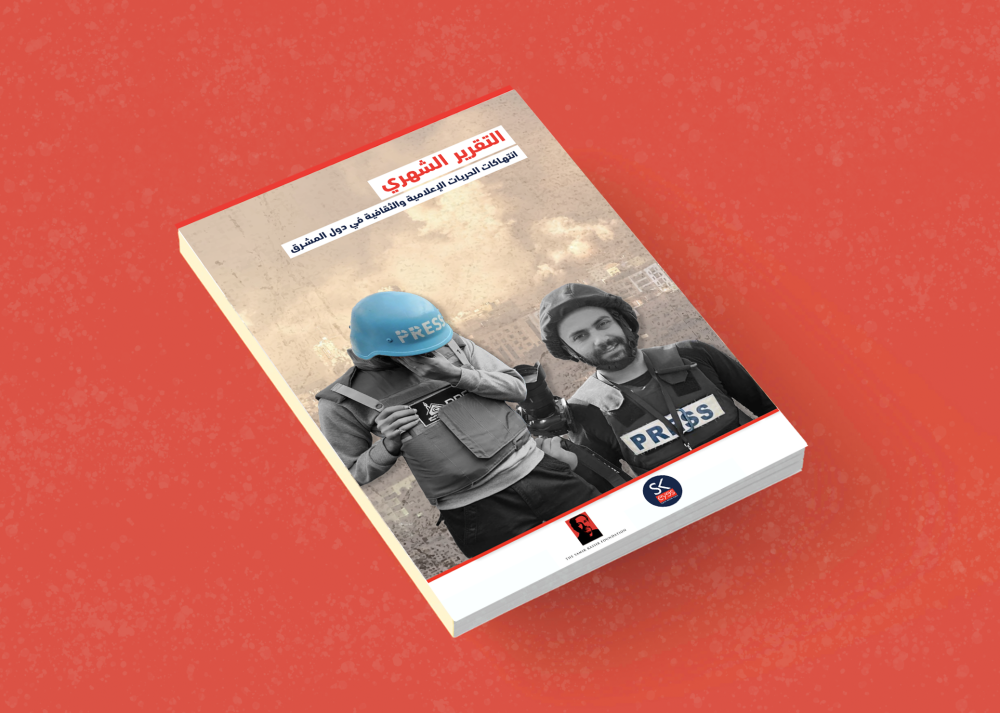
As a result of Israel’s genocidal war in the Gaza Strip, 26 Palestinian journalists, five photographers, four artists, three writers, a filmmaker, and a sound engineer, along with numerous family members were killed. This occurred after the “Al-Aqsa Flood” operation led by Hamas into Israeli territory surrounding Gaza. In southern Lebanon, Israeli forces killed video journalist Issam Abdallah and injured seven other journalists and photographers.
Below is a detailed summary of the violations monitored by the SKeyes Center in Palestine, Lebanon, Syria, and Jordan.
The Gaza Strip has been witnessing an ongoing genocide since October 7. Thousands of people were killed, injured, or missing after Israel declared war on Hamas in retaliation to the “Al-Aqsa Flood” operation. This is one of the deadliest wars for Palestinian media professionals: 26 journalists, five photographers, four artists, three writers, a filmmaker, a sound engineer, and dozens of their family members were killed after Israeli warplanes and tanks shelled their houses.
Here are the media professionals killed by Israel in October 2023: freelance journalist Mohammad Jarghoun (10/07), freelance journalist Assaad Shamlakh (10/08), freelance journalist Anas Abu Shamala (10/09), Khabar agency correspondent Hisham Al-Nawajeha, Khamsa news agency correspondent Saeed Al-Taweel (10/10), Social Media Café journalist Mustafa Al-Naqeeb (10/11), journalist and program producer at Al-Asra radio station, Ahmad Shehab (10/12), Al-Aqsa radio station journalist, Hossam Mubarak, freelance journalist Salam Khalil Mima (10/13), Al-Aqsa satellite channel journalist, Issam Bahar, UNRWA TV journalist, Abdul-Hadi Habib (10/16), Saudi Cultural Center journalist, Mahmoud Abu Zarifa, Palestine Today satellite channel journalist, Mohammad Baalousha (10/17), freelance journalist Iman Jamal Al-Aqili, freelance journalist Aed Al-Najjar (10/20), Al-Aqsa satellite TV journalist, Hani Al-Madhoun (10/21), journalist, director and owner of Ain Media television production company Rushdi Al-Sarraj (10/22), Palestinian Jiu-Jitsu Federation media commission president, journalist Mohammad Matar (10/23), Rawasi Foundation for Culture and Arts director, journalist Mohammad Fayez Al-Hassani, freelance journalist Salma Mukhaimer (10/24), freelance journalist Jamal Al-Faqaawi, Al-Aqsa Network journalist Saed Al-Halabi, Al-Aqsa radio station journalist Duaa Sharaf (10/25), Palestine TV correspondent Nazmi Al-Nadim (10/30), as well as Palestine TV journalists Majed Kashko and Imad Al-Wahidi (10/31).
Also killed were Fourth Authority news agency photographer, Mohammad Al-Salihi, Ain Media photographer Ibrahim Lafi (10/07), Khabar agency photographer Mohammad Sabah (10/10), Al-Aqsa satellite TV photographer, Khalil Abu Azra (10/19), Al-Risala newspaper photographer Mohammad Labbad (10/23), artists Ali Nasman, Hiba Zaqut (10/13), Nasma Abu Sh’ira and Inas Al-Saqqa (10/31), as well as writers Omar Abu Shawish (10/07), Wehbe Al-Madhun (10/15), Wehbe Abu Nada (10/20), filmmaker Samih Al-Nadi (10/18), and Al-Shabab station sound engineer, Mohammad Mohammad Ali (10/19).
Several other media professionals were injured: Al-Ghad correspondent Ibrahim Kannan (10/07), France 24 correspondent Maha Abu Al-Kass (10/10), Palestine TV correspondent Riad Shahine (10/13), Al-Hayat Al-Jadida sports journalist Mumen Al-Tallaa (10/14), freelance photographer Fadi Al-Wahidi (10/28), and journalist Rita Abu Sido (10/31). Connection was lost with Ain Media photographer Haitham Abdul-Wahid and Al-Najah Media Center and New Press agency journalist Nidal Al-Wahidi (10/07).
The Israeli bombings destroyed approximately 30 houses owned by Palestinian journalists and photographers. They also targeted several media institutions offices, destroying them partially or totally; this included the Shehab news agency, Event photography company, Gaza FM, Holy Quran radio stations, Al-Ayam newspaper, Media Group for TV production, Youth Media Center, and the Arab Orthodox Social and Cultural Center. Also, the Israeli army threatened to bomb the house of Al-Jazeera English correspondent Youmna Al-Sayyed (10/30) and 14 out of 15 stations cut off their broadcasts because of Israeli bombardments and threats (10/07). The French company Eutelsat pulled the Al-Aqsa satellite channel off air without prior notice (10/14).
In the West Bank, Israeli forces arrested the Jmedia news agency correspondent Sabri Gebrayel (10/15) and photographer Moaz Amarneh (10/16). They also arrested Al-Aqsa satellite channel correspondent, Mostafa Abdul-Razek Al-Khawaja (10/16), freelance journalist Misaab Khmeis Qfisheh (10/20), the Space media institution director Thaer Ziad Al-Fakhoury (10/20), freelance journalist Mohammad Sabbah (10/23), freelance journalist Radwan Abdul-Kader Qatnani (10/26), freelance journalist Bilal Mohammad Hassan Araman (10/27), and writer Lama Khater (10/26), after raiding their apartments and arresting their family members to force them to surrender. Jmedia director Alaa Al-Rimawi turned himself in after his son was arrested (10/19). Also, journalist Mohammad Badr did the same after his wife, freelance journalist Sujud Assi was arrested and insulted. She was released from the Ofer prison after Badr turned himself in (10/28). It is worth mentioning that his two brothers and father were previously arrested (10/22). Moreover, several settlers attacked the Rai 4 channel team, including correspondent Latifa Abdul-Latif and photographer Thaer Mutawalli (10/16), while the Israeli authorities shut down the Jmedia agency office by military order (10/16).
Internally, the Palestinian security fired a stun grenade at Roya TV correspondent Hafez Abu Sabra who was covering a protest in Nablus (10/18).
In the 1948 Territories, the Israeli police fired teargas and stun grenades at freelance journalists Ali Al-Diwani, Latifa Abdul-Latif, Ammar Awad, and Nader Bibris, as well as correspondents Muammar Awad, Dana Abu Shamsieh, Diala Jweihan, Christine Rinawi and photographers Mahmoud Alyan and Mostafa Al-Kharuf (10/13) in Jerusalem. The police also arrested Russia Today correspondent Dalia Nemer and her colleague photographer Ali Yassine in the Gaza envelope (10/17), journalist Ons Moussa in Umm Al-Fahem (10/18), Sky News correspondent Firas Lotfi and his colleague photographer Mohammad Abu Hadwan in Ashkelon (10/07), BBC correspondent Mohannad Tutunji and photographer Haitham Abu Diab, after beating Tutunji in Tel-Aviv (10/14). The police also arrested artists Maysa Abdul-Hadi (10/12) and Dalal Abu Amneh (10/16) on charges of incitement in Nazareth. Also, an officer beat journalist Najwan Samri, while settlers hampered her work in Jerusalem (10/03) and another time near the Lebanese border (10/12).
The Israeli forces beat the Nas radio correspondent Abdul-Kader Abdul-Halim and the Turkish TNT channel correspondent Mohammad Kheiry, as well as his colleague cameraman Mohammad Abu Sneinieh, after insulting and threatening them (10/12). They also hampered the work of Al-Jazeera channel correspondent Elias Karram in the Gaza envelope (10/12), arrested Al-Ghad correspondent Dia’ Hawshieh and his colleague photographer Monzer Khatib in Jerusalem, while also preventing them from carrying out their journalistic activities in the Gaza envelope (10/17). Furthermore, an Israeli security officer hindered the work of journalist Ahmad Darawshe and threatened him in Ashdod (10/15).
In Lebanon, the Israeli army committed war crimes against journalists and photographers during the month of October, after deliberately targeting media crews in southern Lebanon and killing Reuters video journalist Issam Abdallah. His colleagues, journalists Thaer Al-Sudani and Maher Nazha were injured, as well as Al-Jazeera correspondent Carmen Joukhadar and her colleague photographer Elie Brakhya. AFP photographers Dylan Collins and Christine Assi were also injured, while covering the military escalation at the southern border (10/13). An Israeli tank also targeted Al-Manar correspondent Samer Al-Hajj and photographer Ali Daoud Al-Zein, with the shell landing near them (10/25), while the Israeli army surrounded six foreign journalists in the border town of Hula (10/19). In addition, Hezbollah members arrested freelance journalist Maya Hashem and her colleague photographer. They questioned them after preventing them from covering the events in the southern town of Qleila under the pretext that they don’t have a permit delivered by Hezbollah (10/10). Young people attacked Al-Arabiya channel correspondent, Mahmoud Shukr in the south (10/07). The censorship bureau banned Anja Strelec’s documentary Where Have All the Smiles Gone under the pretext of undermining relations with friendly countries (10/04).
In Syria, an opposition police officer beat citizen journalist Ayham Hilal and prevented him from covering developments in the Aleppo countryside’s city of Azaz (10/06) and the same police unit arrested citizen journalist Saleh Al-Fares in Afrin, a region in northern Aleppo on charges of defamation over a publication (10/26), while the regime-affiliated Ministry of Education dismissed the Al-Tarbawiya satellite channel correspondent, Samaher Danoon, for supporting the protest in Sweida (10/04).
In Jordan, the security services prevented journalists from reaching the US Embassy in Amman to cover the protests that were supposed to take place there, for “security reasons”. Also, Al-Ghad journalists Sarah Zayed and Ghada Al-Sheikh were banned from covering the protest in front of the Israeli Embassy in Amman under the pretext that they did not have their press cards (10/18).
Facebook shut down the account of Jordanian journalist Mona Abu Sabah after she published photos and videos of the “Al-Aqsa Flood” operation (10/07). The son of Palestinian President Mahmoud Abbas filed a complaint for slander and defamation against Jordanian journalist Hanaa Al-Aaraj over a video about the link between companies, in which President Abbas invests, and several projects funded by USAID and the Palestine Investment Fund (10/08). In addition, an Israeli artist stole a drawing by Jordanian artist Imad Hajjaj, which he signed after changing and distorting it to serve the Israeli narrative (10/25).
This report was produced with the support of UNDEF.png)