


 Sunday , 15 March 2026
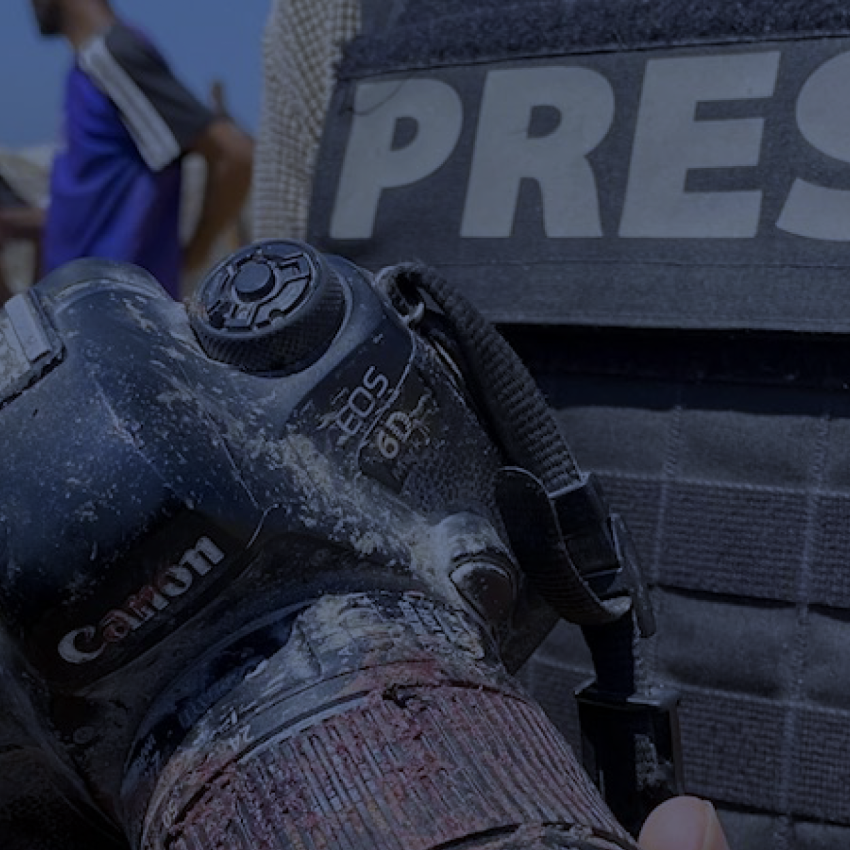
One journalist was killed and two others were injured in Syria’s Latakia countryside. Israeli violations against journalists, artists, and media and cultural institutions exceeded 35 incidents in the West Bank and the 1948 Territories, while assaults, summonses, and legal complaints against them continued in Lebanon.
Below is a detailed summary of the violations monitored by the Samir Kassir Foundation’s SKeyes Center for Media and Cultural Freedom in Lebanon, Syria, Palestine, and Jordan.
In Lebanon, Emirati businessman Khalaf Al-Habtoor filed a complaint against Al-Akhbar journalist Paul Makhlouf on charges of “defamation and libel” over an article (02/14). The Anti-Cybercrime and Intellectual Property Rights Bureau also summoned freelance journalist Mahasen Morsel in connection with a complaint filed against her by Ziad Al-Amin, adviser to Future Movement Secretary-General Ahmad Hariri, over a tweet in which she discussed Al-Amin’s alleged relationship with Hamas (02/16). The same bureau summoned Beirut 2030 editor-in-chief Carine Abdelnour over a complaint filed against the website (02/23). Both journalists refused to appear, stating that they would testify only before the Publications Court. Moreover, actor Assaad Rechdan appeared before the Criminal Investigation Department in Beirut after being summoned over a “defamation and libel” complaint filed against him by MP Gebran Bassil following a post in which he criticised him, as well as another complaint filed by a lawyer accusing him of “inciting the killing of innocents” after a television interview (02/26).
In a separate incident, members of the Lebanese Army beat Red TV correspondent Mustafa Aridi and his colleague, cameraman Adham Hariri, Al-Manar cameraman Jihad Awwad, as well as freelance journalists Alaa Sukkar and Abbas Fakih while they were covering protesters blocking the Ring bridge in Beirut (02/17).
In Syria, journalist and Civil Peace Committee member Alaa Mohammad was found dead in his home in the village of Nini in the Latakia countryside (02/22). In addition, correspondents Hassan Hashem and Shawkat Aqja were injured by a landmine explosion while covering demining operations in the town of Salma, also in the Latakia countryside (02/17).
In the West Bank, Israeli forces arrested freelance journalists Mohammad Abu Thabet (02/10) and Bushra Al-Taweel (02/05), as well as freelance photographer Hatem Hamdan, who was subsequently placed under four months of administrative detention after spending 13 days in custody (02/05). They also detained Agence France-Presse contributor Mohammad Ateeq, Al-Araby TV correspondent Amid Shehadeh and his colleague photographer Rabih Munayer, freelance journalists Mohammad Abed and Israa Ghorani, Quds Network journalist Muath Ghannam, Palestine TV correspondent Amir Shaheen and his colleague photographer Salim Basharat, freelance photographer Mohammad Mansour, and Al-Kofiya TV correspondent Zaid Abu Arra, who was beaten and had his equipment confiscated by two settlers (02/05), as well as freelance journalist Mohammad Nazzal (02/08).
Israeli forces also prevented freelance photographer Ma’mun Wazuz, Al Jazeera correspondent Montaser Nassar and his colleague photographer Ahmad Amro, Palestine TV correspondent Jihad Al-Qawasmeh and his colleague photographer Thaer Faqousa (02/08), and Al Jazeera correspondent Tharwat Shaqra together with freelance photographer Wahaj Bani Mufleh (02/20) from covering events. Furthermore, the Ofer military court renewed the administrative detention of freelance journalist Ossayd Amarneh for six months (02/27).
Meanwhile, the Palestinian police arrested Al-Araby Al-Jadeed correspondent Jihad Barakat and freelance journalist Rami Samara while they were covering a protest, releasing them hours later (02/18).
In the 1948 Territories, Israeli police arrested freelance journalist Nisreen Salem (02/15), who was released a week later under restrictive conditions that included house arrest, a ban from Al-Aqsa Mosque, and the payment of a large financial bail. They also arrested Ibrahim Sinjlawi (02/25) and Ahmad Jalajel (02/26), who were each handed one-week bans from Al-Aqsa Mosque, and Nawal Hijazi, who was questioned and released hours later (02/25). Police also summoned freelance photographer Mohammad Abu Sneineh and freelance journalist Mohammad Sadeq (02/16), as well as Ma’an News Agency’s Jerusalem correspondent Mayssa Abu Ghazaleh (02/25), imposing bans from Al-Aqsa Mosque for varying durations.
Israeli authorities also ordered the closure of the Burj Al-Luqluq Cultural Association for six months under the pretext that “an activity of or on behalf of the Palestinian Authority, or under its patronage, was taking place at the association” (02/17). Channel 14 also incited against an art exhibition in Jerusalem by Palestinian visual artist and director of the Umm Al-Fahm Art Gallery Said Abu Shakra (02/02), while unidentified individuals attacked a truck belonging to Beit Al-Karma Theatre (02/02).
The Israeli Ministry of Defence decided to ban Al-Asima News Network, Mi’raj Network, Quds Network, as well as the websites Al-Bawsala and Midan Al-Quds, citing alleged incitement in their coverage of events in Jerusalem and Al-Aqsa Mosque (02/22).
In the Gaza Strip, no violations were recorded on the media and cultural scene during February 2026, marking the first such month since the outbreak of the latest war on the Strip.
In Jordan, no violations were recorded either during that month.