


 Monday , 22 December 2025
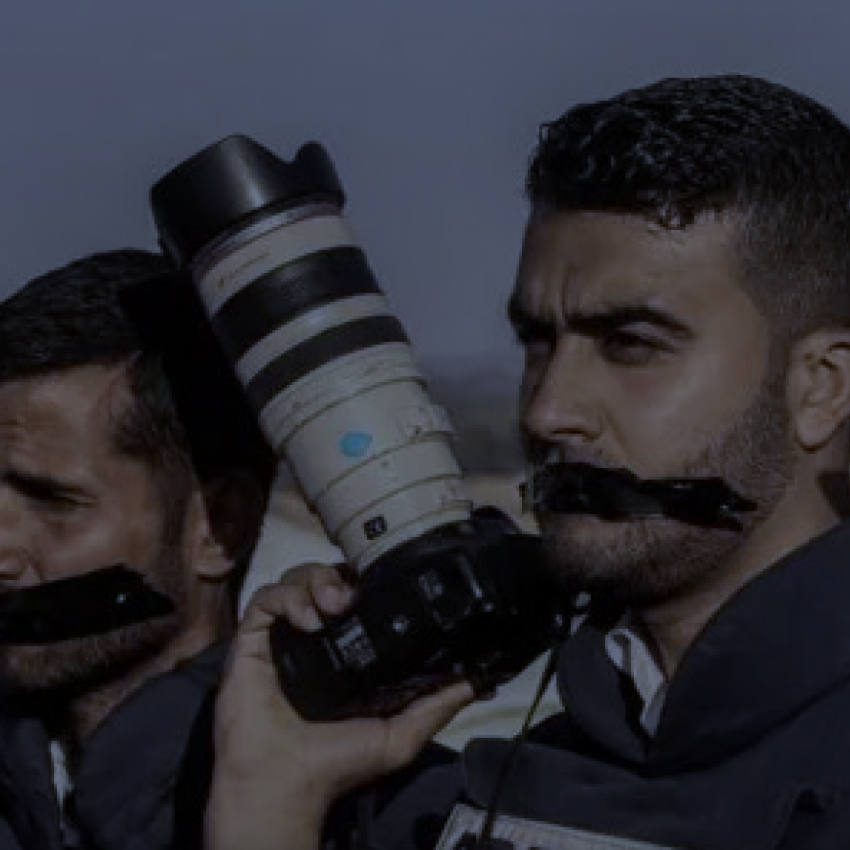
In November 2025, Israeli violations in the West Bank, Jerusalem, and Gaza rose to nearly thirty incidents. The most serious development was the Israeli Knesset’s initial approval of a bill granting the Minister of Communications the authority to shut down foreign media outlets or block their websites without a court order. Meanwhile, publication bans continued to shape the media environment in Jordan, while Lebanon witnessed a rise in judicial summonses and complaints targeting journalists.
Below is a detailed overview of the violations monitored by the Samir Kassir Foundation’s SKeyes Center for Media and Cultural Freedom in Lebanon, Palestine, Syria, and Jordan.
In Lebanon, judicial summonses and complaints constituted the most prevalent form of violations throughout November. The Criminal Investigations Department summoned Megaphone editor-in-chief Samer Frangieh and managing director Jean Kassir following a complaint filed by Roula Bahnam over a video addressing renovation work at her villa above the Monk Seal Cave (11/20). In addition, MP Gebran Bassil filed a complaint against the two journalists before the Court of Appeal Prosecutor after they published a video addressing the exploitation of public maritime property (11/11).
In Saida, the judicial police summoned Nida’ Al-Watan deputy editor-in-chief Rami Naim (11/21). The Anti-Cybercrime and Intellectual Property Rights Bureau also summoned Samir Kassir Foundation journalist and researcher Karim Safieddine, along with journalist Marwan Issa, following a complaint filed by banker Antoun Sehnaoui concerning an article (11/28). In a separate case, the bureau summoned journalist Joelle Abdul-Aal of the Sharika Walaken platform in response to a complaint filed by a domestic workers’ recruitment agency (11/25). All journalists who were summoned chose not to comply.
Additionally, lawyer Aimée Helou filed a complaint against comedian Mario Moubarak on charges of “insulting and blaspheming the name of Christ and offending religious sanctities,” following the release of a satirical video. Moubarak was also subjected to an online incitement campaign and received death threats (11/27).
In the Gaza Strip, the Israeli army continued shelling several areas despite the declared ceasefire. Israeli warplanes bombed the Aasqula neighbourhood, injuring freelance photojournalist Ibrahim Hajaj while he was reporting from the area (11/19).
In the West Bank, Israeli forces fired live ammunition, teargas, and sound bombs at Al Jazeera correspondents Laith Jaar (11/08) and Montaser Nassar (11/28), along with their cameramen Fadi Yassin (11/08) and Ahmed Amro (11/28). They also targeted Al-Hadath newspaper correspondent Misaab Shawar on two occasions (11/22) and (11/28), Al-Ghad TV correspondent Raed Al-Sharif (11/22), Xinhua photographer Ma’moun Wazzouz on two occasions (11/22) and (11/28), and freelance photographer Mohammad Nazzal (11/28).
Israeli forces also detained Anadolu Agency photographer Hisham Abu Shaqra (11/21), as well as Al-Ghad cameraman Shadi Jararaa, Al-Fajr Al-Jadeed TV correspondent Yazan Hamayel, and cameraman Ahmed Shawish (11/27). In addition, they violently shoved freelance journalist Amer Al-Shaludi and forced freelance photographer Yasser Al-Thalji to delete all photos from his phone (11/29).
Separately, Israeli settlers severely beat Al Jazeera correspondent Mohammad Al-Atrash and cameraman Luay Esaid, Xinhua photographer Nael Bweitil, Reuters photographer Raneen Sawafta, and Seba News photographer Nasser Shtayeh (11/08). A settler also arrested freelance journalist Ahmed Al-Halaika, questioned him, and searched his vehicle (11/22).
In addition, the Ofer military court sentenced freelance photographer Ramez Awad to two years in prison on charges of incitement against Israel, citing content published on his Instagram account (11/18).
In the 1948 Territories, Israeli police summoned freelance journalist Majdi Al-Abbasi for interrogation at the Al-Qishla police station in Jerusalem and issued him an order banning him from entering the Al-Aqsa Mosque on two occasions (11/02). Israeli forces also raided the Al-Hakawati Theatre in Jerusalem and halted a cultural performance, citing alleged links between the organizing entity and the Palestinian Authority. In addition, they summoned and questioned the theatre’s director, Amer Khalil (11/23). Meanwhile, the Sakhnin municipality banned the screening of the film “Lyd” by director Rami Younes following incitement by right-wing Israeli organizations and threats from the Israeli police (11/06).
The Jerusalem Magistrate’s Court postponed the trial of freelance journalist Ramzi Abbasi until February 10 (11/10). The Haifa District Court decided to maintain the house arrest of freelance journalist Saeed Hasanein, restricting it to his hometown of Shefa-Amr and without electronic monitoring (11/26). During the same period, the Israeli Knesset approved, in a first reading, a bill allowing the Minister of Communications to shut down foreign television channels or block their websites without a judicial order (11/10).
In Jordan, the Public Prosecutor issued a publication ban on a criminal case involving an employee of the Public Antiquities Department, following social media reports alleging the embezzlement of archaeological artifacts. In the absence of official information, the Media Commission subsequently issued a directive instructing media outlets and social media platforms to refrain from publishing any material related to the case or the ongoing investigation (11/03).