


 Tuesday , 29 January 2013
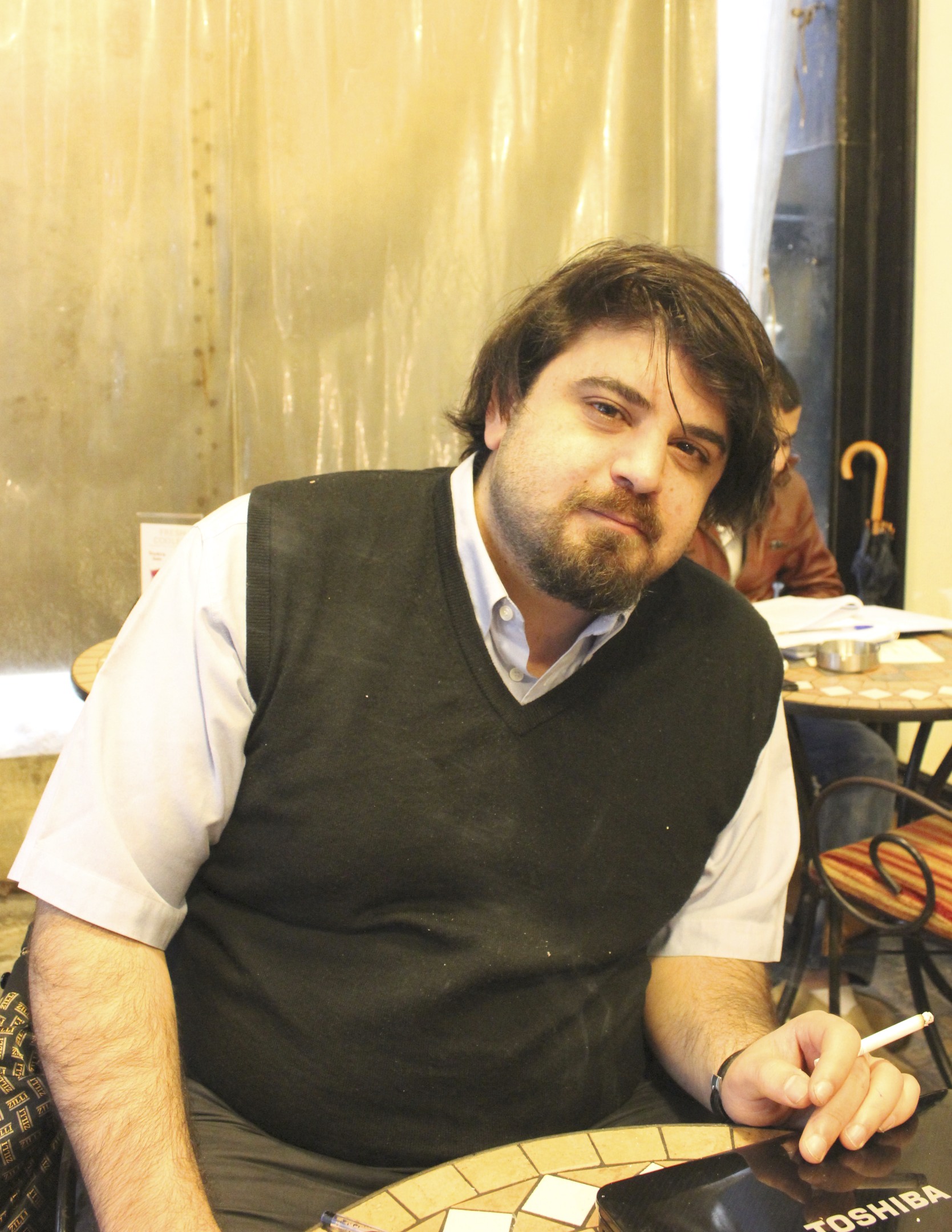
“In Lebanon you have this fertile mix,” Omar Sabbagh, a Lebanese poet who grew up in London, says about the diversity of the Lebanese public. “Because of that (the people) are so talented. They are spurred to be talented, but then they have no opportunity. So then what happens?”
Sabbagh’s father was born in Palestine and his mother is from Syrian and Iraqi origins. They met at the American University of Beirut, but moved to England at the beginning of the Lebanese Civil War. Throughout the late 1980s and 1990s, Sabbagh’s family came to Lebanon on summer vacations and for family weddings. So, he was acquainted with the country as a child and young adult.
In 2006, Sabbagh’s Parents moved back to Lebanon. However, Sabbagh stayed in London to pursue his university education. He began a PhD program in English literature at Cambridge, but woke up one morning and decided he wanted to be a poet.
Eventually, he completed his PhD in English literature at Kings College London in 2010. He moved to Beirut a year and a half ago to teach English literature and creative writing at the American University of Beirut and pursue his career as a writer. His coming to Beirut is a counter trend to all of the young Lebanese who are leaving the country for better opportunities, Sabbagh says.
Sabbagh’s work is about family, public and private identity, metaphysics, first love and desire. He does not write overtly political poetry because he does not feel there are any social or political constraints on his writing that he needs to struggle against. “I would feel strange to write political poetry when I lead an easy life,” he says.
“I find Lebanon and London equally home and not home to me… I feel at home in both and I feel alienated in both,” Sabbagh says. “Wherever I can express myself either poetically or philosophically I am at home… I find a way of coping with the alienation.”
“Lebanon is very much like a teenager… it is very much a culture of narcissism,” Sabbagh continues. “Image is very important here instead of some sort of essence.”
“A few years ago Beirut was the book capital of the world,” Sabbagh says. “It made no fucking sense to me.” Lebanese are good entrepreneurs and business people, but not very many people here actually read books. “The readers and writers are form Iraq and north Egypt; the more cultural centers,” he adds.
Lebanon is an antagonistic society in a lot of ways, Sabbagh continues. “It’s the most judgmental and egocentric country in the world and at the same time the most libertarian and anarchic,” he says. Still, Lebanese are incredibly intelligent and creative people. “They are kind of victims of their own brilliance as it were.”
“You have a façade that covers the real issues,” Sabbagh says of the Lebanese society. The divide between rich in poor is huge, but religious identity supersedes any kind of class-consciousness.
“I would feel strange trying to write from a gritty position given that I live quite an easy life; if not spiritually or emotionally, at least materially,” Sabbagh continues. “If there was no fuck up, or privation, or something missing, you don’t express yourself… If I was happy, or if anyone was happy, they don’t write, they don’t read, they don’t listen to music, they don’t make music. They just live.”
“Because I live in a bubble so to speak, I’m euphonious. I look for beauty rather than gritty truth,” Sabbagh says. “There is something about a beautiful line that is just as important as politics… (It) is like saying there is meaning that isn’t ruined by the way the world is.”
Sabbagh has published three books of poetry titled “My Only Ever Oedipal Complaint,” “The Square Root of Beirut” and “Waxed Mahogany.” They are available at the AUB bookstore.
Eric Reidy is a project assistant at the SKeyes Center
for Media and Cultural Freedom researching and writing about the cultural scene
in Beirut. This article is part of a regular interview series with artists
living, working, and creating in Beirut.
Previous articles:
·
“Beirut has a
special magic”: An interview with Syrian artist Gylan Safadi
·
“Our culture is
dying”: An interview with Mohamad Hodeib
·
“It’s a place for
music… Beirut”: An interview with Bilad El-Sham
·
“Culture has been put
on the side”: An interview with Dima Mabsout