


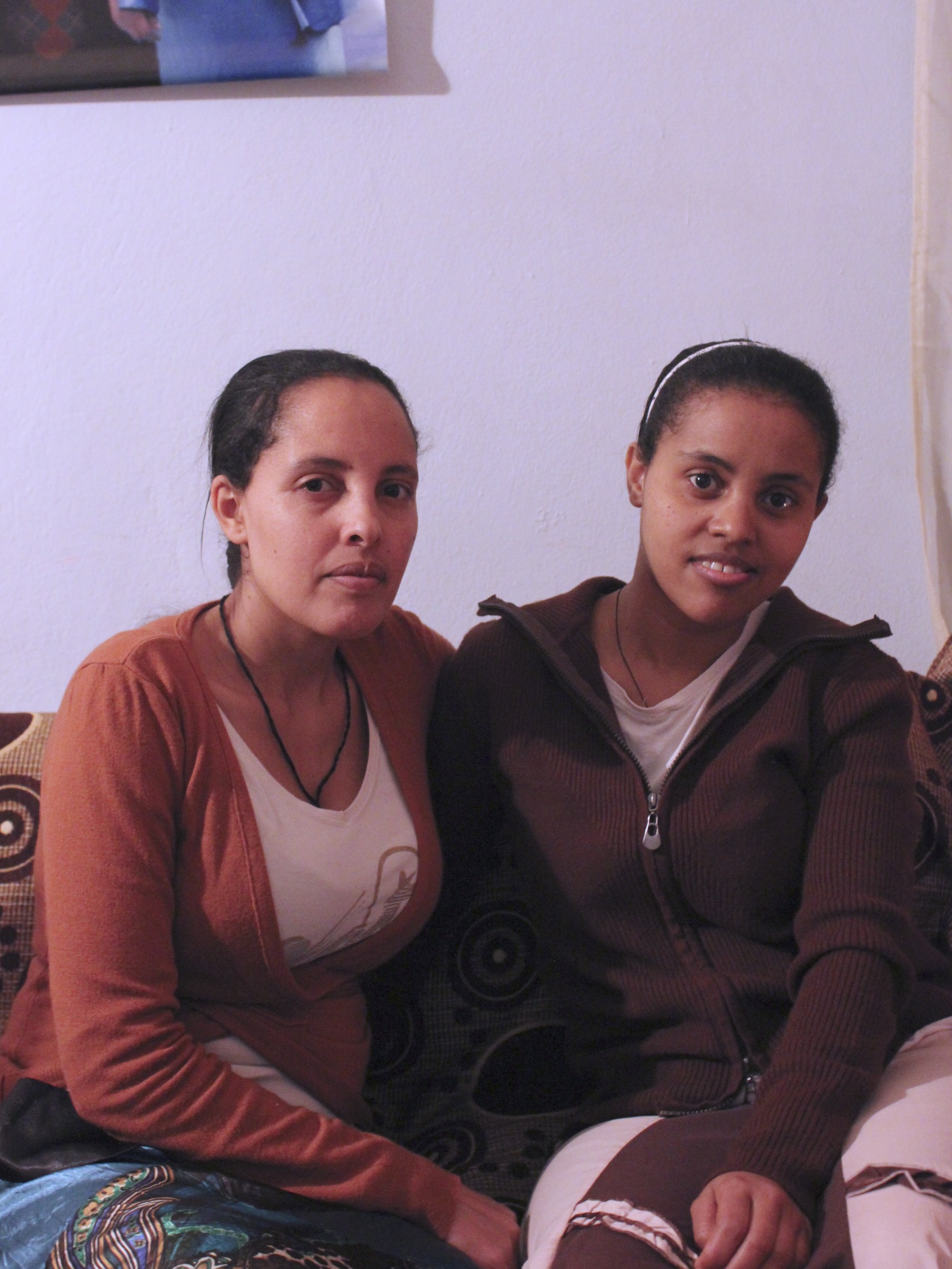
“I need to show the reality. I don’t care what the reaction is,” says Shewa Wolde, an Ethiopian migrant worker and writer who recently screened her first film in Beirut.
Wolde has been working as a housemaid for the same family since she came to Lebanon more than 10 years ago. She considers herself very lucky. Ninety-nine percent of migrant workers have a more difficult situation than me, she says. “I feel like they are my second family,” she adds about her employers. “I’m happy with my masters.”
When she was five years old growing up in Ethiopia, Wolde had a teacher who had high standards for his students. He made sure they learned the alphabet and began to learn to read, she says.
Wolde’s family did not have much money, she continues. Her mother wallpapered their small home in old newspapers, and Wolde would read the newspapers on the walls. On one of the papers there was a poem about cigarettes that Wolde read everyday. She thought to herself that she would like to write something like that, she says. So, she started writing poetry at a young age.
When she came to Lebanon at the age of 16, Wolde began writing short stories about the experience of migrant workers in the country. The film she made started as a short story. When people read it they had very powerful reactions, which made her want to turn it into a film, Wolde continues.
The movie, titled “Jirah al-Qalb” (Arabic for Wound of the Heart), took three and a half years to make, she says. Other than the title, the film is in Amheric, which is Wolde’s native language.
Wolde worked with seven actors and actress and a director, all of them Ethiopian migrant workers in Lebanon. The only time the cast had to work on the movie was on Sundays because it is the only day they do not have to work during the week, she continues. They would work on the movie for an hour or so every Sunday rehearsing the script and, later, filming. It was a fun activity for them to do together, she adds.
The movie was filmed using a camera Wolde bought with her own money, she says. They did not get permits from General Security to do the filming or run into problems from authorities along the way. “If they see an American or a European with a camera they will think you are a spy. Nobody expects to see us using a camera,” she explains.
The movie is over an hour and a half long and deals with the mistreatment of migrant workers in Lebanon and with issues within the migrant worker community. Some migrant workers who come here end up getting involved with drugs or resort to prostitution, Wolde says. This is part of the reality.
The film was screened for the first time during the last week of February in the Badaro neighborhood of Beirut. More than 130 Ethiopian migrant workers came to view the film. However, it was initially difficult to find a place to screen the film, Wolde says. Also, she would like foreign and Lebanese audiences to be able to watch the film as well. So, she is currently looking for help to add English and Arabic subtitles.
When asked about her thoughts on the cultural scene in Beirut or the city’s role as a cultural center in the region, Wolde shrugs her shoulders. The day-to-day experience of migrant workers is so far removed from the cultural scene in Beirut that it is virtually irrelevant.
Wolde has also completed a book of religious poetry and recorded spiritual songs. After working on her first film for three and a half years, Wolde says, she is looking forward taking the lessons she has learnt from the experience and responses to her film and moving on to her next project. She is particularly thankful for the support she has received from her two sisters who are also migrant workers in Beirut, she adds.
Eric Reidy is a project assistant at the SKeyes Center for Media and Cultural Freedom researching and writing about the cultural scene in Beirut. This article is part of a regular interview series with artists living, working, and creating in Beirut.
Previous Articles:
· “Beirut has a special magic”: An interview with Syrian artist
Gylan Safadi
· “Our culture is dying”: An interview with Mohamad Hodeib
· “It’s a place for music… Beirut”: An interview with Bilad
El-Sham
· “Culture has been put on the side”: An interview with Dima
Mabsout
. “Everyone is leaving. I’m coming here”: An interview with Omar
Sabbagh
